The Serene Sanctuary: Decoding Zen Modern house Design
In an increasingly chaotic world, the desire for tranquility and simplicity has propelled the rise of Zen modern house design. This aesthetic, a harmonious blend of Japanese Zen philosophy and contemporary architectural principles, creates spaces that are not just visually appealing but also conducive to mindfulness and inner peace. This article delves into the core tenets of Zen modern design, exploring its key elements and how they contribute to a serene and balanced living environment.
1. Embracing Minimalism: Less is More
Zen modern design champions minimalism, a concept deeply rooted in the Zen Buddhist principle of stripping away the unnecessary to reveal the essential. This translates to uncluttered spaces, clean lines, and a deliberate avoidance of ornamentation.
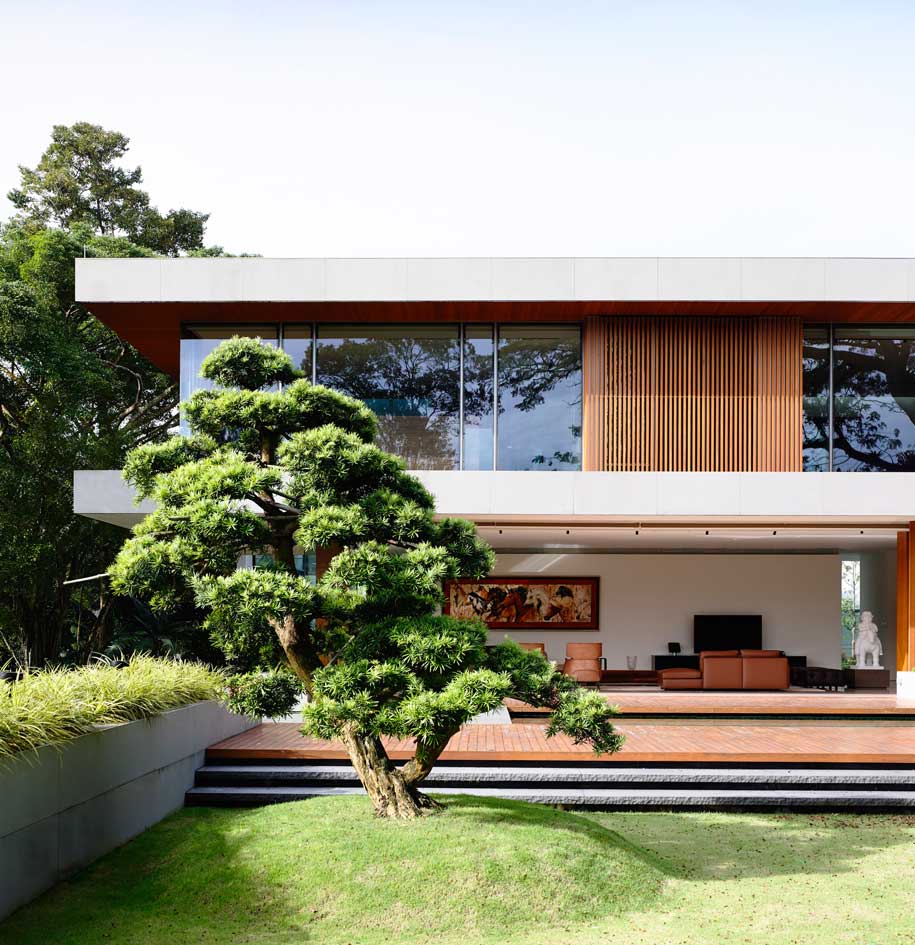
Modern Zen Home Design Case Studies Habitus Living
Harnessing Negative Space: The strategic use of empty space, or “ma,” is crucial. This allows the eye to rest and creates a sense of openness and tranquility. Walls are often kept bare, and furniture is carefully selected to avoid overwhelming the room.
Streamlined Forms and Clean Lines: Geometric shapes and simple, unadorned forms define the architectural and furniture elements. This emphasis on clarity and precision contributes to a sense of order and calm.
Storage Solutions for a Clutter-Free Life: Integrated storage solutions are paramount. Built-in cabinets, hidden compartments, and minimalist shelving ensure that belongings are neatly tucked away, maintaining the uncluttered aesthetic.
2. The Importance of Natural Light and Connection to Nature
Zen philosophy emphasizes the connection between humans and the natural world. Zen modern design reflects this by maximizing natural light and integrating natural elements.
Large Windows and Skylights: Expansive windows and skylights invite ample natural light into the home, creating a bright and airy atmosphere. This connection to the outdoors fosters a sense of well-being and vitality.
Indoor-Outdoor Flow: Seamless transitions between indoor and outdoor spaces are achieved through sliding glass doors, patios, and courtyards. This blurring of boundaries allows residents to connect with nature and experience the changing seasons.
Natural Materials: The use of natural materials, such as wood, stone, bamboo, and paper, is essential. These materials bring warmth, texture, and a sense of authenticity to the design.
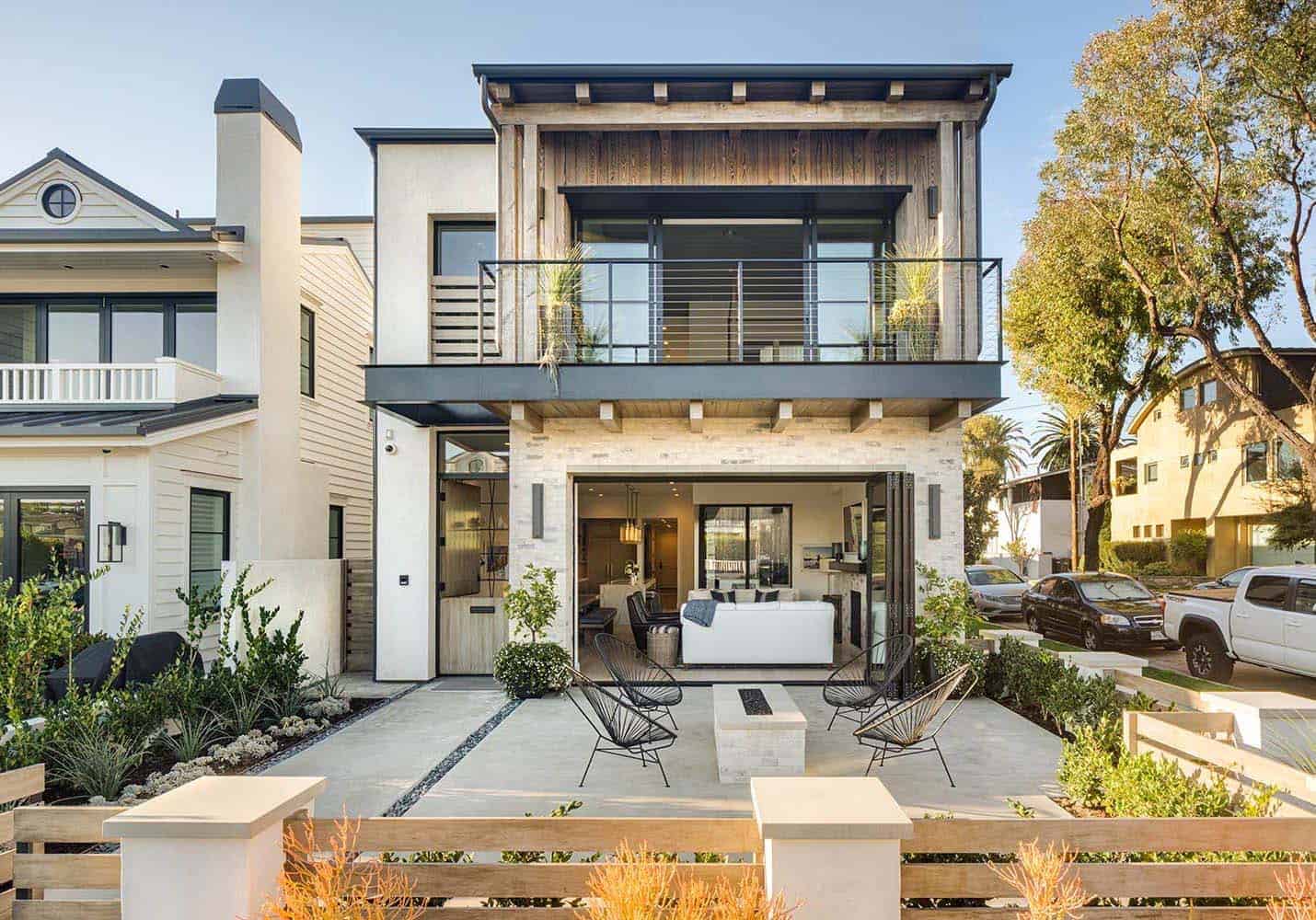
Fabulous Beach House With Zen Inspired Interiors In Corona Del Mar
3. The Role of Natural Materials: Grounding the Space
Natural materials are not just aesthetically pleasing; they also possess inherent qualities that contribute to the calming atmosphere of a Zen modern home.
Wood: Warmth and Organic Texture: Wood is a staple material in Zen design, used for flooring, walls, furniture, and structural elements. Its natural warmth and organic texture create a sense of comfort and connection to nature.
Stone: Grounding and Stability: Stone, with its inherent strength and solidity, provides a sense of grounding and stability. It is often used for flooring, countertops, and accent walls.
Bamboo: Versatility and Sustainability: Bamboo, a sustainable and versatile material, is used for flooring, screens, and decorative elements. Its light color and delicate texture contribute to a sense of serenity.
Paper: Translucence and Soft Light: Shoji screens, made from translucent paper, diffuse natural light and create a soft, calming ambiance.
4. The Color Palette: A Symphony of Neutrality
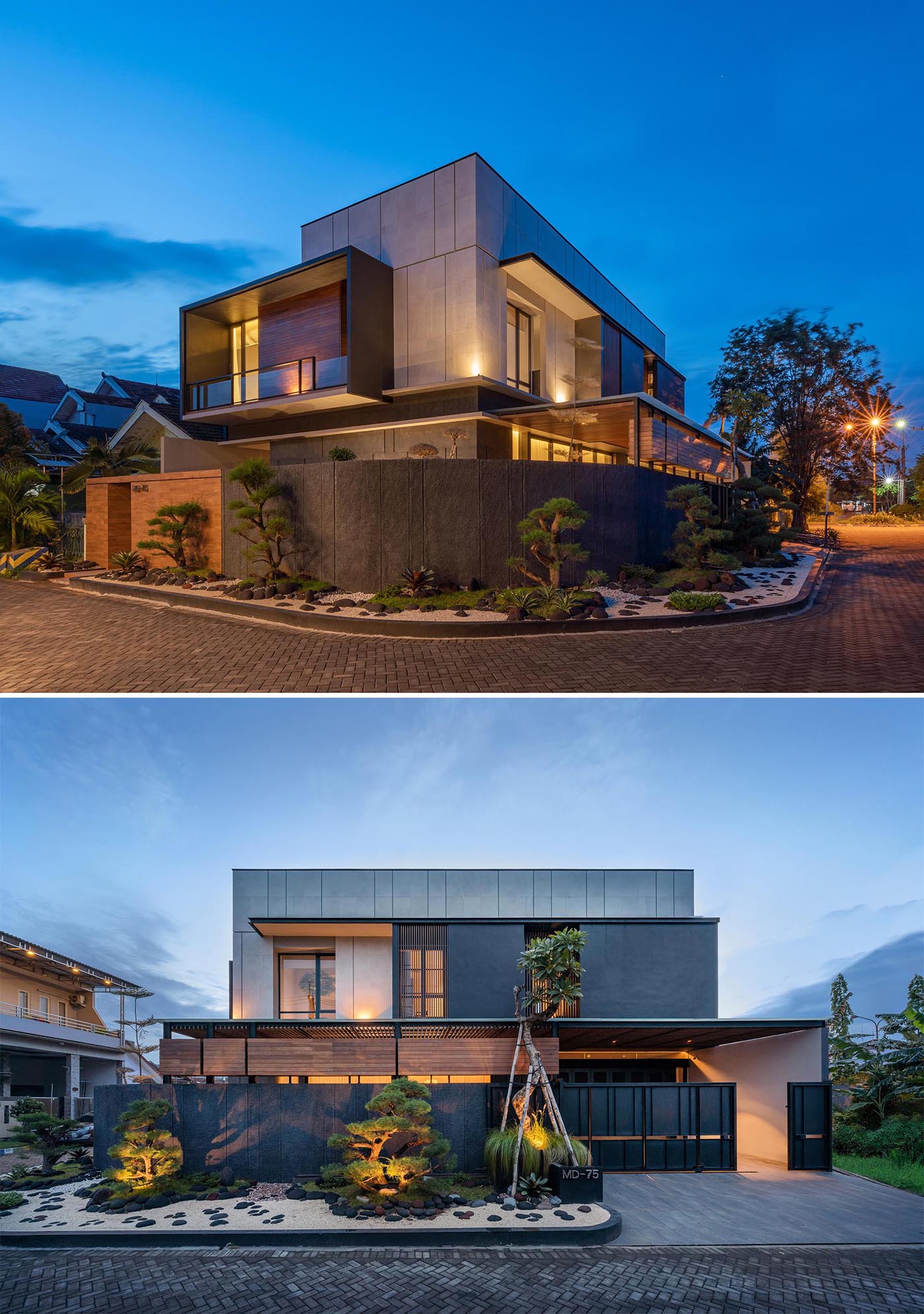
A Zen Garden Wraps Around The Corner Of This House
The color palette in Zen modern design is typically neutral and understated, reflecting the tranquility and simplicity of the aesthetic.
Whites and Creams: Purity and Light: Whites and creams create a sense of spaciousness and purity, reflecting natural light and enhancing the feeling of calmness.
Grays and Beiges: Grounding and Serenity: Grays and beiges provide a grounding and serene backdrop, creating a sense of stability and balance.
Natural Wood Tones: Warmth and Authenticity: The natural tones of wood add warmth and authenticity to the color palette, connecting the space to nature.
Accents of Nature-Inspired Colors: Subtle accents of nature-inspired colors, such as greens, blues, and browns, can be incorporated to add depth and visual interest.
5. The Art of Wabi-Sabi: Embracing Imperfection
Wabi-sabi, a Japanese aesthetic philosophy that celebrates the beauty of imperfection and transience, plays a significant role in Zen modern design.
Celebrating Natural Patina and Aging: Wabi-sabi encourages the appreciation of natural patina and the signs of aging in materials, recognizing the beauty of impermanence.
Handcrafted and Unique Objects: Handcrafted and unique objects, with their inherent imperfections, add character and authenticity to the space.
Asymmetrical Arrangements and Natural Forms: Asymmetrical arrangements and natural forms are embraced, reflecting the organic and imperfect nature of the world.
6. The Importance of Functional Furniture: Form Follows Function
Furniture in Zen modern design is carefully selected for its functionality, comfort, and aesthetic appeal.
Low-Profile Furniture: Low-profile furniture, such as platform beds and floor cushions, creates a sense of spaciousness and openness.
Multifunctional Furniture: Multifunctional furniture, such as storage ottomans and convertible sofas, maximizes space and efficiency.
Natural Materials and Simple Designs: Furniture is typically made from natural materials, such as wood and linen, and features simple, unadorned designs.
7. Integrating Zen Gardens: Extending the Sanctuary Outdoors
Zen gardens, with their carefully raked gravel, moss-covered stones, and minimalist plantings, extend the serenity of the interior to the outdoors.
Raked Gravel and Stones: Raked gravel and stones create a sense of tranquility and order, representing the flow of water and the mountains.
Moss and Natural Vegetation: Moss and natural vegetation add texture and a sense of natural beauty to the garden.
Minimalist Plantings: Minimalist plantings, such as bonsai trees and bamboo, create a sense of calm and contemplation.
Water Features: Small water features, such as fountains or ponds, add a soothing sound and a sense of movement to the garden.
8. The Role of Lighting: Creating Ambiance and Atmosphere
Lighting plays a crucial role in creating the ambiance and atmosphere of a Zen modern home.
Natural Light as the Primary Source: Natural light is prioritized, with large windows and skylights maximizing its presence.
Soft, Diffused Lighting: Soft, diffused lighting is used to create a calming and relaxing atmosphere.
Layered Lighting: Layered lighting, including ambient, task, and accent lighting, provides flexibility and control over the ambiance.
Natural Materials for Lighting Fixtures: Lighting fixtures are often made from natural materials, such as paper, wood, and bamboo, further reinforcing the connection to nature.
9. The Importance of Sound and Smell: Engaging the Senses
Zen modern design engages all the senses, including sound and smell, to create a holistic and immersive experience.
Natural Sounds: Natural sounds, such as the rustling of leaves, the sound of water, and the chirping of birds, are encouraged.
Aromatic Scents: Aromatic scents, such as incense, essential oils, and fresh flowers, are used to create a calming and uplifting atmosphere.
Soundproofing and Noise Reduction: Soundproofing and noise reduction measures are implemented to create a tranquil and peaceful environment.
10. The Personal Touch: Creating a Unique Sanctuary
While Zen modern design adheres to certain principles, it is essential to personalize the space to reflect individual tastes and preferences.
Meaningful Objects and Artwork: Meaningful objects and artwork, such as family heirlooms, travel souvenirs, and personal creations, add character and personality to the space.
Personal Collections and Hobbies: Personal collections and hobbies, such as books, plants, and musical instruments, can be incorporated into the design.
Creating a Space for Meditation and Reflection: Designating a space for meditation and reflection, such as a corner with cushions and a low table, fosters mindfulness and inner peace.
In conclusion, Zen modern house design is more than just an aesthetic; it is a philosophy of living that promotes simplicity, tranquility, and harmony. By embracing minimalism, connecting with nature, and incorporating natural materials, you can create a serene sanctuary that fosters mindfulness and well-being. This design philosophy provides a respite from the chaos of modern life, allowing you to cultivate a sense of inner peace and balance within your own home.