
The Evolving Canvas: Modern house Yard Design in the 21st Century
The modern house yard has transcended its traditional role as a mere patch of green. It’s now a dynamic, multi-functional space, reflecting the homeowner’s lifestyle, aesthetic, and environmental consciousness. From minimalist urban courtyards to sprawling suburban landscapes, contemporary yard design embraces innovation, sustainability, and a seamless integration with the indoor living space. This article delves into the key trends and principles shaping the modern house yard, exploring the diverse elements that contribute to its transformation.
Modern yard design isn’t simply about planting flowers and mowing the lawn. It’s a holistic approach that considers the yard as an extension of the home, emphasizing functionality, aesthetics, and sustainability.
1. Seamless Indoor-Outdoor Flow

The concept of blurring the lines between indoor and outdoor spaces is paramount. Large sliding glass doors, floor-to-ceiling windows, and strategically placed patios or decks create a visual and physical connection, expanding the living area and fostering a sense of openness. This can be achieved through:
Consistent Material Use: Extending flooring materials from indoors to outdoor patios creates a cohesive look.
2. Minimalism and Simplicity
Modern design often favors clean lines, uncluttered spaces, and a focus on essential elements. This translates to yards with:
Reduced Plant Palette: Choosing a few key plant species and repeating them throughout the yard creates a sense of unity and reduces visual clutter.
3. Sustainability and Eco-Consciousness
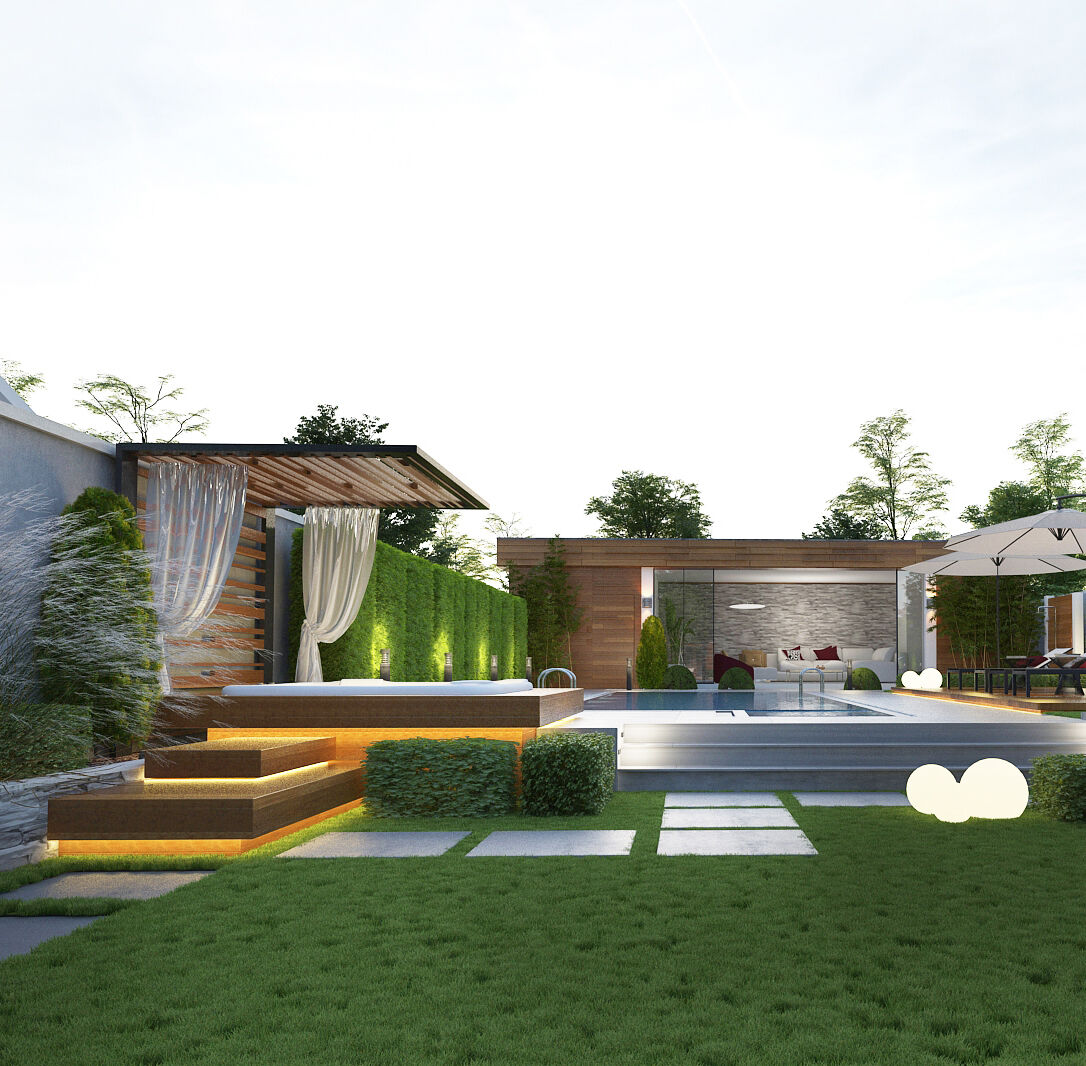
Environmental responsibility is a driving force in modern yard design. This includes:
Water Conservation: Implementing drought-tolerant landscaping, rainwater harvesting systems, and efficient irrigation practices.
4. Multi-Functional Spaces
Modern yards are designed to serve a variety of purposes, from relaxation and entertainment to gardening and recreation. This requires:
Defined Zones: Creating distinct areas for different activities, such as a dining patio, a fire pit area, or a children’s play space.
The specific elements incorporated into a modern yard will vary depending on the homeowner’s preferences and the size and location of the property. However, some common features include:
1. Hardscaping: Defining the Space
Hardscaping elements, such as patios, walkways, and retaining walls, provide structure and definition to the yard. Modern hardscaping emphasizes clean lines, durable materials, and a seamless integration with the surrounding landscape.
Concrete and Stone: Polished concrete, natural stone, and pavers are popular choices for patios and walkways.
2. Softscaping: Embracing Nature
While minimalism is a key principle, modern yards still embrace the beauty of nature. The focus is on creating a balanced and harmonious landscape that complements the architecture of the house.
Strategic Plant Placement: Plants are used to create focal points, define boundaries, and soften hard edges.
3. Water Features: Adding Tranquility
Water features, such as fountains, ponds, and reflecting pools, add a sense of tranquility and visual interest to the yard. Modern water features are often minimalist and integrated into the overall design.
Geometric Water Features: Rectangular or square reflecting pools and minimalist fountains are popular choices.
4. Lighting: Enhancing Ambiance
Lighting plays a crucial role in creating a welcoming and functional outdoor space. Modern yard lighting emphasizes subtlety and energy efficiency.
LED Lighting: Energy-efficient LED lights are used to illuminate pathways, patios, and focal points.
5. Outdoor Living Spaces: Extending the Home
Modern yards are designed to be extensions of the home, providing comfortable and functional spaces for relaxation, entertainment, and dining.
Outdoor kitchens: Fully equipped kitchens with grills, refrigerators, and sinks are becoming increasingly popular.
The design of a modern yard will vary depending on the specific type of property and the homeowner’s needs.
1. Urban Courtyards
Urban courtyards are often small and enclosed, requiring creative solutions to maximize space and functionality.
Vertical Gardening: Utilizing walls and fences for planting.
2. Suburban Backyards
Suburban backyards offer more space and flexibility in design.
Defined Zones: Creating distinct areas for different activities.
3. Front Yards
Front yards are often overlooked, but they play a crucial role in curb appeal.
Low-Maintenance Landscaping: Choosing plants that require minimal upkeep.
Modern yard design is constantly evolving, driven by technological advancements, environmental concerns, and changing lifestyles. Some emerging trends include:
Smart Technology: Integrating smart irrigation systems, lighting controls, and outdoor entertainment systems.
In conclusion, the modern house yard is a dynamic and evolving space that reflects the homeowner’s lifestyle, aesthetic, and environmental consciousness. By embracing principles of minimalism, sustainability, and functionality, homeowners can create outdoor spaces that are both beautiful and practical, seamlessly integrating with the indoor living area and enhancing the overall quality of life. The canvas is yours, and the possibilities are endless.


